

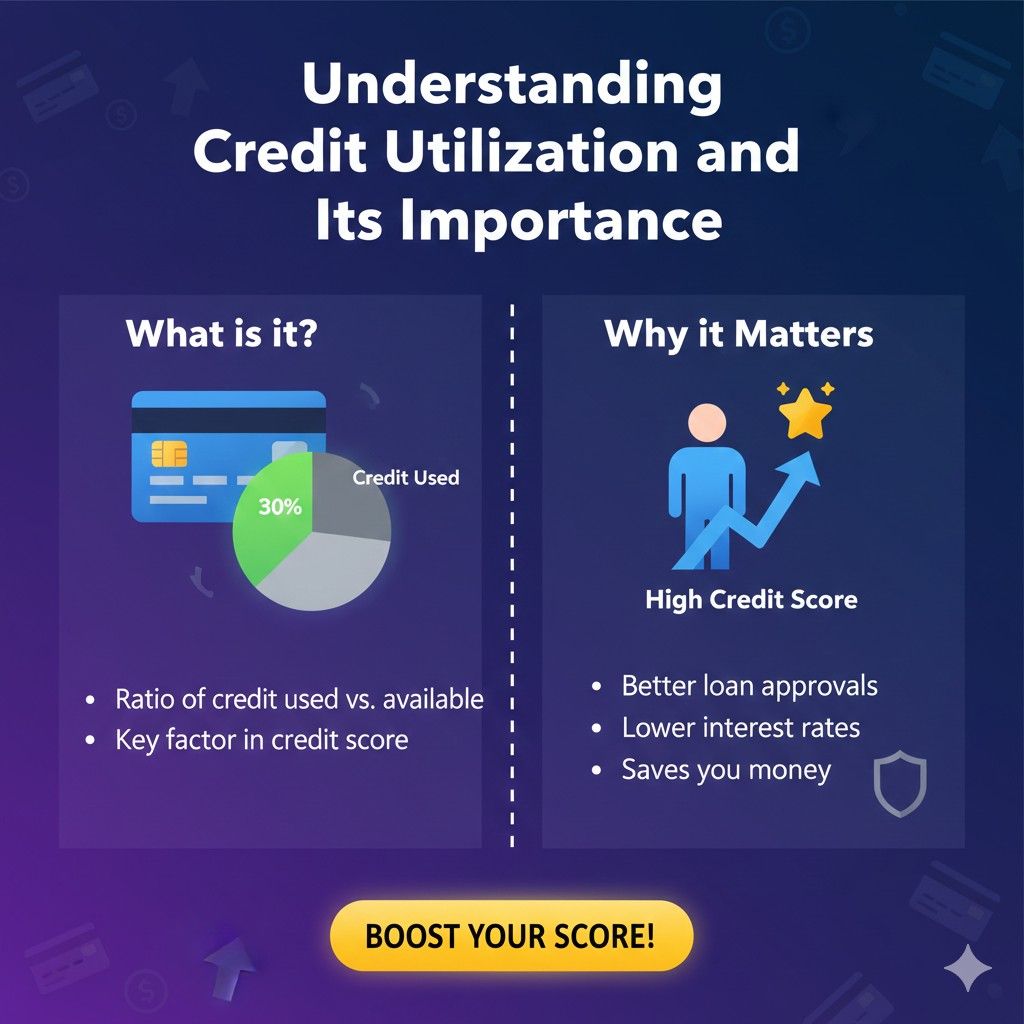
Introduction: Why Credit Utilization Confuses So Many People
Many people in the United States pay their credit card bills on time yet still struggle with low or stagnant credit scores. One major reason is credit utilization, a factor that strongly influences credit scores but is often misunderstood.
Understanding credit utilization and its importance helps individuals manage credit responsibly, avoid score drops, and build long-term financial stability. This article explains credit utilization in a clear, educational, problem-solving way, designed to avoid thin content and meet AdSense + YMYL standards.
What Is Credit Utilization?
Credit utilization refers to the percentage of available credit you are currently using.
Simple Definition
Credit utilization =
(Total credit used ÷ Total credit limit) × 100
It applies to:
- Credit cards
- Revolving credit lines
It does NOT apply to installment loans like personal loans or mortgages.
How Credit Utilization Is Calculated
Individual Card Utilization
Each credit card has its own utilization ratio.
Example:
- Credit limit: $5,000
- Balance: $1,500
- Utilization: 30%
Overall Credit Utilization
Total balances across all cards divided by total available credit.
Both individual and overall utilization matter.
Why Credit Utilization Is So Important
Credit utilization is a major factor in credit scoring models.
Impact on Credit Score
- High utilization signals higher risk
- Low utilization signals responsible credit use
It is second only to payment history in importance.
Why Lenders Care About Utilization
Lenders view high utilization as:
- Dependence on credit
- Potential repayment risk
Lower utilization suggests financial control.
Ideal Credit Utilization Ratio Explained
General Best Practice
- Below 30% is considered good
- Below 10% is excellent
Lower ratios typically support stronger credit scores.
Is Zero Utilization Better?
Not always.
Using credit lightly and paying it off shows activity and responsibility.
How High Credit Utilization Hurts You
Immediate Credit Score Drops
High balances can lower scores quickly.
Reduced Approval Chances
High utilization may lead to:
- Loan denials
- Higher interest rates
Financial Stress Risk
High usage can indicate over-reliance on credit.
Common Causes of High Credit Utilization
Carrying Large Balances
Balances close to credit limits increase utilization.
Low Credit Limits
Even small balances can cause high utilization.
Multiple Cards With Balances
Several high-balance cards amplify overall usage.
Step-by-Step: How to Improve Credit Utilization
Step 1: Pay Down Existing Balances
Lower balances immediately reduce utilization.
Step 2: Make Multiple Payments Per Month
Reduces reported balances.
Step 3: Avoid Maxing Out Cards
Keep spending well below limits.
Step 4: Request Credit Limit Increases (Carefully)
Higher limits can lower utilization if spending stays the same.
Step 5: Spread Spending Across Cards
Avoid concentrating balances on one card.
Credit Utilization vs Available Credit
More available credit improves utilization—but only if managed responsibly.
High limits combined with high spending do not help.
How Credit Reporting Timing Affects Utilization
Statement Date vs Payment Date
Utilization is reported based on statement balances, not payment dates.
Why Timing Matters
Paying before the statement closes can lower reported utilization.
Common Credit Utilization Myths
Myth: Paying in Full Once a Month Is Enough
High statement balances can still hurt utilization.
Myth: Closing Cards Improves Utilization
Closing cards reduces available credit, increasing utilization.
Myth: Utilization Has Long-Term Memory
Utilization resets monthly based on balances.
Credit Utilization and Long-Term Credit Health
Consistently low utilization supports:
- Higher credit scores
- Lower interest rates
- Better loan terms
It reflects sustainable credit behavior.
How Credit Utilization Fits Into Personal Finance
Credit utilization affects:
- Loan eligibility
- Insurance rates
- Housing applications
It influences broader financial opportunities.
Frequently Asked Questions (FAQs)
Does credit utilization reset every month?
Yes, based on current balances.
Does utilization matter if I pay on time?
Yes, it affects scores even with on-time payments.
Is utilization calculated per card or overall?
Both matter.
Can utilization alone lower my score?
Yes, high utilization can cause drops.
How fast can utilization improvements help?
Often within one billing cycle.
Conclusion: Credit Utilization Is a Controllable Score Factor
Understanding credit utilization and its importance gives individuals direct control over a major credit score factor. By managing balances, timing payments, and maintaining low usage ratios, individuals can strengthen credit profiles without taking on additional debt.
Consistent credit utilization discipline leads to long-term financial flexibility and stability.

